


You sit down at your desk in the morning, and before you know it, hours have passed without you even standing up once. It feels normal, even productive — but your body may be quietly paying a price for it.
That price is often something called sciatica, and office life is one of its biggest causes.
What Is Sciatica, Really?
Deep in your lower back, there is a long nerve called the sciatic nerve, and it runs all the way down through your hips and into your legs. When something presses on this nerve or irritates it, you can feel pain, tingling, or numbness anywhere along that path — sometimes in your back, sometimes in your hip, and sometimes all the way down to your foot.
It is not just a backache. It is your nerve sending out a warning signal.
Why Sitting All Day Makes It Worse
 When you sit for long hours, especially with poor posture, the lower part of your spine gets squeezed more than it should. This extra pressure can push on the discs in your back, and over time, those discs can press against the sciatic nerve.
Sitting also weakens your hip and core muscles, since they barely get used while you are seated. Weak muscles mean less support for your spine, which makes it even easier for that nerve to get irritated.
So while sitting feels harmless in the moment, doing it for eight or nine hours a day, five days a week, adds up to a real strain on your body.
Signs Your Body Might Be Warning You
You don’t have to wait for severe pain to take this seriously. Some early signs include a dull ache in your lower back after sitting, a tingling feeling in your leg or foot, or a strange heaviness in one leg that wasn’t there before.
These signs often show up slowly, so it’s easy to ignore them until they become harder to ignore.
What Can Actually Help
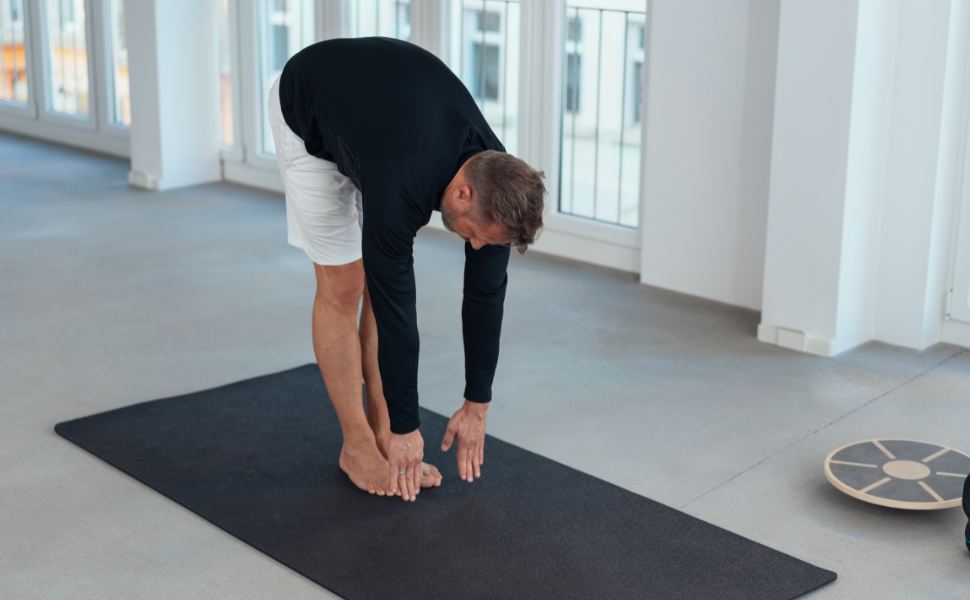 The good news is that sciatica caused by sitting is very manageable, especially if you catch it early. Simple changes like standing up every thirty minutes, stretching your hips and lower back, and strengthening your core muscles can take a lot of pressure off that nerve.
Correct posture also makes a bigger difference than most people realise, since sitting with your spine in its natural position keeps the pressure on your back much more even.
But if the pain has already started, the right movements matter even more than just moving in general. The wrong stretch or exercise can sometimes make things worse instead of better, which is why guidance from someone who understands your body is so valuable.
We’re Here to Help
At SwaHealth Physiotherapy Rehab, we help people understand exactly why their pain is happening and guide them through the right movements to fix it safely. If long hours at your desk have started to show up as pain in your back or leg, don’t wait for it to get worse — come talk to us, and let’s get you moving comfortably again.
You sit down at your desk in the morning, and before you know it, hours have passed without you even standing up once. It feels normal, even productive — but your body may be quietly paying a price for it.
That price is often something called sciatica, and office life is one of its biggest causes.
What Is Sciatica, Really?
Deep in your lower back, there is a long nerve called the sciatic nerve, and it runs all the way down through your hips and into your legs. When something presses on this nerve or irritates it, you can feel pain, tingling, or numbness anywhere along that path — sometimes in your back, sometimes in your hip, and sometimes all the way down to your foot.
It is not just a backache. It is your nerve sending out a warning signal.
Why Sitting All Day Makes It Worse
When you sit for long hours, especially with poor posture, the lower part of your spine gets squeezed more than it should. This extra pressure can push on the discs in your back, and over time, those discs can press against the sciatic nerve.
Sitting also weakens your hip and core muscles, since they barely get used while you are seated. Weak muscles mean less support for your spine, which makes it even easier for that nerve to get irritated.
So while sitting feels harmless in the moment, doing it for eight or nine hours a day, five days a week, adds up to a real strain on your body.
Signs Your Body Might Be Warning You
You don’t have to wait for severe pain to take this seriously. Some early signs include a dull ache in your lower back after sitting, a tingling feeling in your leg or foot, or a strange heaviness in one leg that wasn’t there before.
These signs often show up slowly, so it’s easy to ignore them until they become harder to ignore.
What Can Actually Help
The good news is that sciatica caused by sitting is very manageable, especially if you catch it early. Simple changes like standing up every thirty minutes, stretching your hips and lower back, and strengthening your core muscles can take a lot of pressure off that nerve.
Correct posture also makes a bigger difference than most people realise, since sitting with your spine in its natural position keeps the pressure on your back much more even.
But if the pain has already started, the right movements matter even more than just moving in general. The wrong stretch or exercise can sometimes make things worse instead of better, which is why guidance from someone who understands your body is so valuable.
We’re Here to Help
At SwaHealth Physiotherapy Rehab, we help people understand exactly why their pain is happening and guide them through the right movements to fix it safely. If long hours at your desk have started to show up as pain in your back or leg, don’t wait for it to get worse — come talk to us, and let’s get you moving comfortably again.